


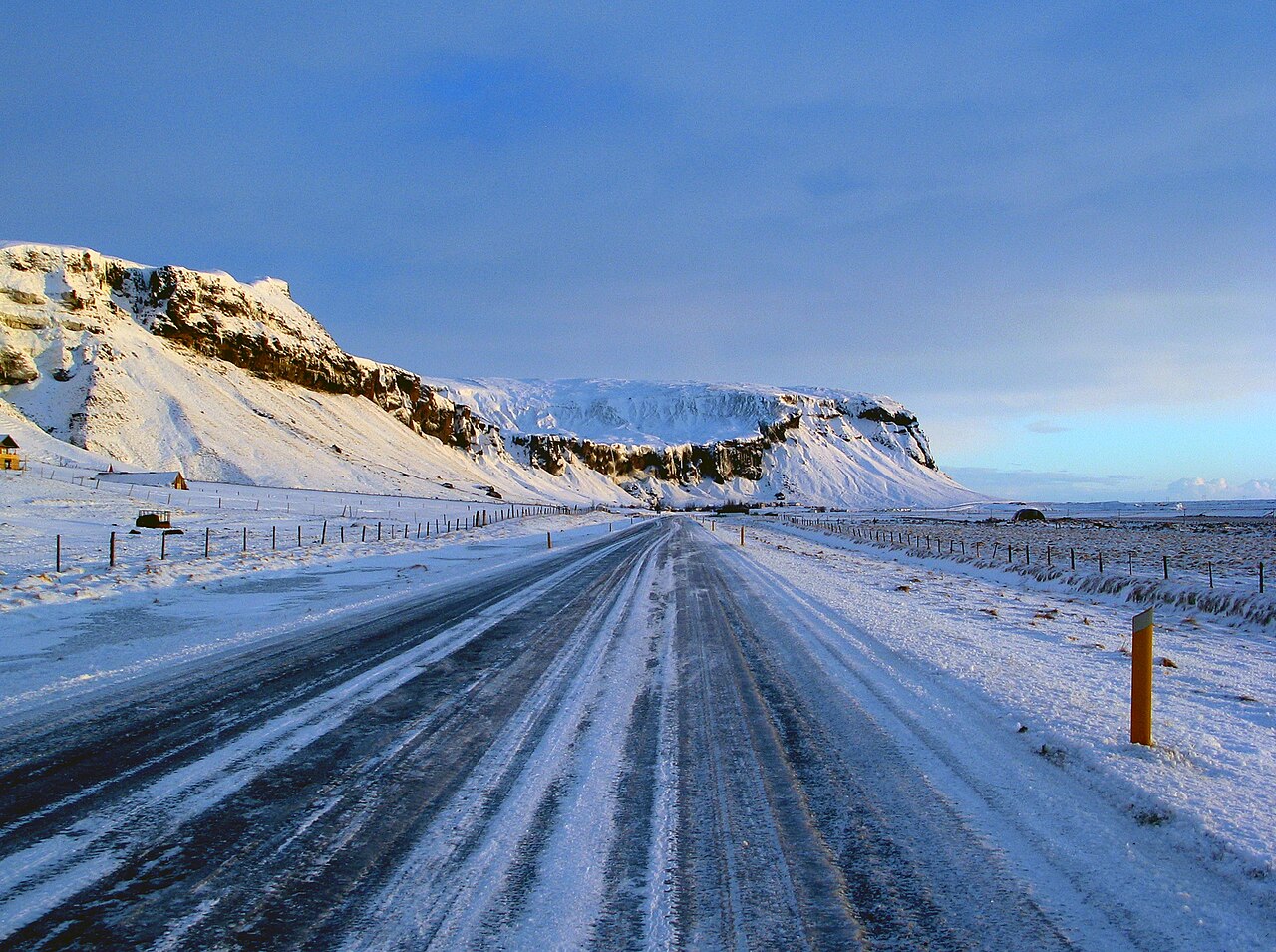
Decide whether to leave before choosing stops
The winter journey from Vík to Höfn is not simply the summer itinerary with warmer clothes. Ice, snow, wind, poor visibility and limited daylight can change the road and the time available for every stop. Safetravel advises drivers to allow extra time, keep plans flexible and be ready to change or cancel travel when conditions become unsafe. [1]
Begin with three original sources on the morning of travel. Read Umferðin for the road, the Icelandic Meteorological Office for the forecast and public warnings, and Safetravel for current travel advice. Check again during the day from a safe place. A clear road at breakfast is not a promise about the afternoon. [2] [3] [4] [5]
Read the road notices and forecast as well as the colour shown on a map. If a road is closed, respect the closure. If conditions feel beyond your experience, wait in a safe place or change the journey.
Vík to Höfn
On the map
Explore the locations using the links below.
OpenFreeMap · © OpenMapTiles · © OpenStreetMap
General destination areas only. The map does not draw a driving route, identify a winter stopping place or show where it is safe to park. Use current official road information and signs.
Location sources
- Vík village area · Visit South Iceland
- Kirkjubæjarklaustur village area · Visit South Iceland
- Skaftafell visitor area · Visit South Iceland
- Jökulsárlón · Visit South Iceland
- Höfn town area · Visit South Iceland
Google Maps displays all locations as stops. Their order is not a suggested itinerary.
Give the road enough time
This guide treats Vík and Höfn as the ends of the day. It does not promise a driving time or a list of stops that will fit. Winter travel can be slower, and Safetravel notes that snow, rain, drifting snow and strong wind can make driving difficult even when the road first appears clear. [1]
Protect a daylight margin rather than filling every bright hour with sightseeing. Decide on your latest sensible departure and arrival times using the forecast for your date. Then place one main stop inside that window. Everything else is optional.
| Priority | Plan | If conditions worsen |
|---|---|---|
| Essential | Reach confirmed accommodation safely | Pause, wait or stop earlier |
| Main visit | Choose Skaftafell or Jökulsárlón | Shorten or remove the visit |
| Optional | Add one checked roadside stop | Drop it without replacing it |
Our Vík to Höfn two day itinerary gives a broader sequence for milder or more settled travel. In winter, use that page as a menu of places, not a checklist.
Choose stops that can be dropped
Kirkjubæjarklaustur is the main settlement between Vík and the Skaftafell area. Use it as a practical decision point: reassess the road, weather, remaining daylight and your own alertness before continuing east. A pause for fuel or food is not lost sightseeing time when it protects the rest of the journey.
At Skaftafell, a published trail description does not confirm the surface you will find. Read the national park information and ask about current conditions when staff are available. Choose a short visit only when the actual trail, light and weather fit. Our Skaftafell trail comparison explains the official route choices, but it is not a live condition report. [6]
Jökulsárlón and the coast across Route 1 are separate visitor areas. The lagoon can be the main stop when road and weather conditions support it, but moving ice, water and surf are not predictable scenery. Follow current signs and stay well away from the water. Our Jökulsárlón and Diamond Beach guide helps you choose the two sides without assuming both must fit. [7]
The map below marks general destination areas. It does not draw a driving route, identify a winter stopping place or show where it is safe to park. Use current official road information and signs on the day.
Prepare the vehicle before moving
Safetravel advises using a vehicle suitable for the planned journey with appropriate winter equipment, including winter tyres. Four wheel drive can help in some conditions, but it does not remove the risk of skidding. If you are renting, confirm the vehicle and equipment directly with the rental company rather than assuming what the booking includes. [1]
- Clear snow and ice from every window, mirror, light and the roof.
- Turn on both front and rear lights. The automatic setting may not activate the rear lights.
- Keep more distance and allow more room for braking on slippery roads.
- Do not stop on the road for a photograph. Use a safe designated place.
- Slow before a single lane bridge and follow the posted instructions.
Safetravel also advises checking road and weather conditions in the morning and several times during a winter day. Make those checks while stopped safely, never while driving. [2]
Know when to change the plan
A flexible plan needs a clear action, not just a hopeful backup list. Agree before leaving which person will check conditions and what will trigger a change.
- A closure or official instruction: follow it. Do not search for an improvised bypass.
- Strong wind, drifting snow or poor visibility: stop in a safe place and reassess the original sources.
- Less daylight than expected: remove the next visit and continue only if the road and your driving plan remain suitable.
- Fatigue or discomfort: change driver when appropriate or stop. A reserved room farther east is not a reason to keep driving beyond your safe limit.
If you are not comfortable driving in winter conditions, choose transport that does not put you behind the wheel. Do not let a prepaid activity or photograph decide that the road is suitable.
Protect the final arrival
Save the address, contact details and arrival instructions for your accommodation before leaving Vík. Tell the property if your arrival plan changes. Do not assume an unmarked roadside area is available for waiting, parking or sleeping.
Finish the day in Höfn rather than adding another exposed detour. Our Höfn guide separates the town from nearby nature stops. Once you arrive, make the next day from fresh road and weather information rather than carrying unfinished plans forward.
Our Travel conditions page brings official weather, road and safety links together. It is a planning aid, not an emergency service, and the original authorities remain the source for current advice.
Common questions
Can I drive from Vík to Höfn in winter?
The decision depends on the road, weather, daylight, vehicle and your winter driving experience on the day. Check Umferðin, the Icelandic Meteorological Office and Safetravel before leaving and again during the journey.
Does four wheel drive make the road safe?
No. Safetravel says it can help in some winter conditions, but it does not remove the risk of skidding on ice. Vehicle choice never overrides a closure or unsafe conditions.
Should I visit Skaftafell and Jökulsárlón on the same day?
Treat one as the main visit and the other as optional. Use current park, road and weather information, and keep enough time for the final journey to Höfn.
What should I remove first when the day runs late?
Remove the next optional stop. Protect the final drive, a safe arrival margin and the chance to stop if conditions change.
Sources & useful links
Checked 21 October 2026. Trail access, weather and operator details can change.
- Safetravel: winter driving guidance ↗
- Safetravel: driving advice ↗
- Icelandic Road and Coastal Administration: current road information ↗
- Icelandic Meteorological Office: forecasts and warnings ↗
- Safetravel: current travel conditions ↗
- Vatnajökull National Park: Skaftafell ↗
- Vatnajökull National Park: Jökulsárlón ↗