


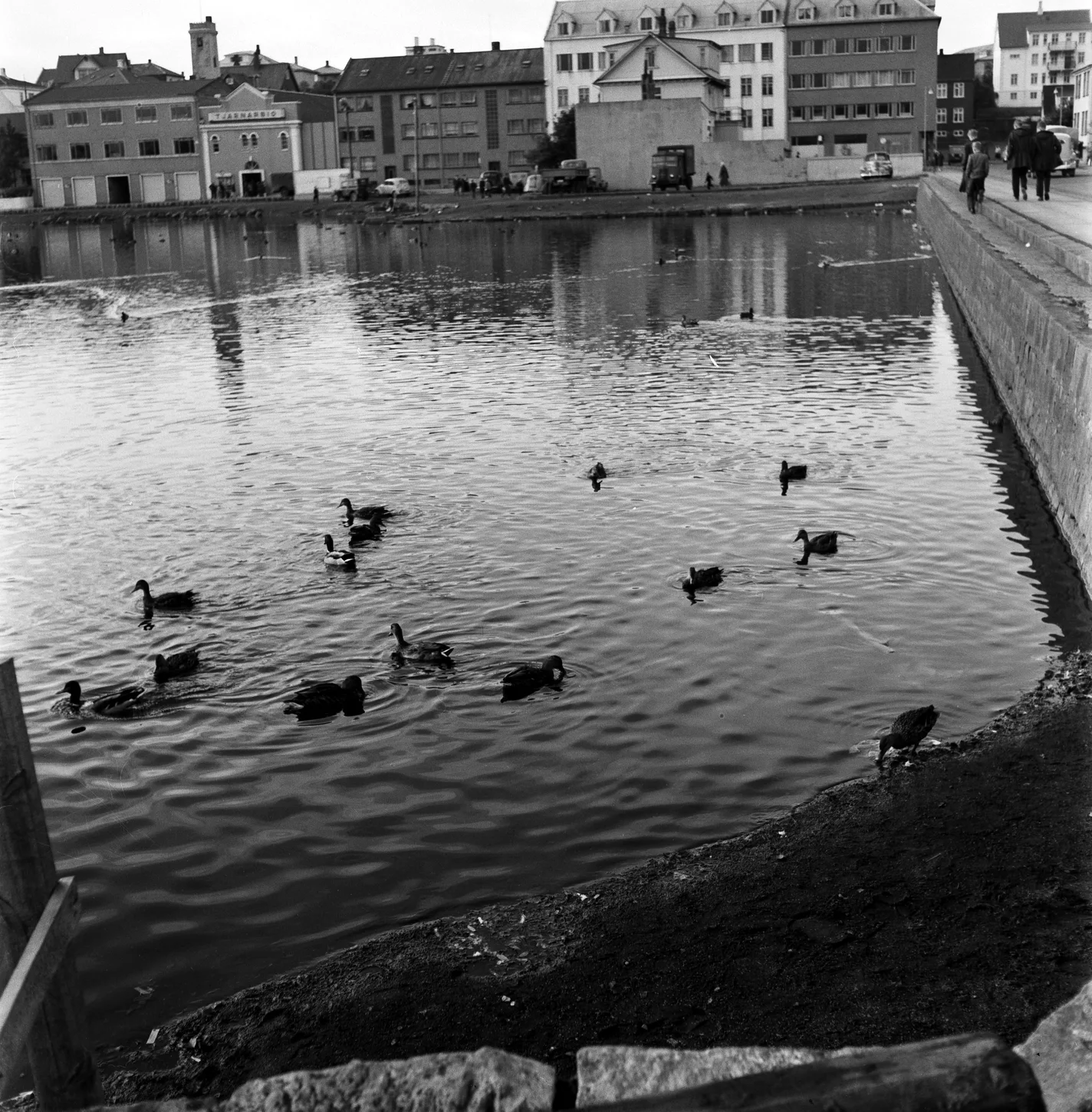
Stop by the town shore
If you have time for just one view, start on the north shore by City Hall. Face the water first, then look back at the streets. This is the end of the freshwater pond where the town began to grow. The photograph above shows how closely the houses already followed the water around 1960. [2]
Reykjavík
On the map
Explore the locations using the links below.
OpenFreeMap · © OpenMapTiles · © OpenStreetMap
Pond and park area only. The marker does not show a path or an entrance to the sanctuary.
Location sources
Follow the water into the park
For a longer walk, make Suðurtjörn, the southern pond, your next destination. The name Hljómskálagarðurinn comes from Hljómskálinn, the pavilion where brass bands rehearsed. Look for the pavilion as you walk: it gives you a turning point that does not depend on spotting a particular bird. [1]
Watch without feeding
Try watching one mallard on the water before scanning for tufted ducks. The islands are nesting places, so watch them from the shore. Leave the bread behind: the city notes that feeding ducks also draws gulls. Binoculars let you watch a bird preen or dive without making it move away. [1]
Where should I look in winter?
Look from the bank near Iðnó. Warm water keeps a patch open at the outlet even when much of the pond freezes. Open water is a reason to look for birds there, not a way to judge the strength of the ice. Stay on the shore. [1]
Is the bird sanctuary part of the park walk?
No. Vatnsmýri is a separate wetland south of Hringbraut. The city describes its sanctuary paths as open outside the nesting season. Check signs before entering. If access is restricted or unclear, stay in the public park by Suðurtjörn. You do not need to enter the reserve to enjoy birdwatching at Tjörnin. [1]
Reykjavík city guide · Reykjavík rainy day guide
Sources & useful links
Checked 9 November 2026. Trail access, weather and operator details can change.