


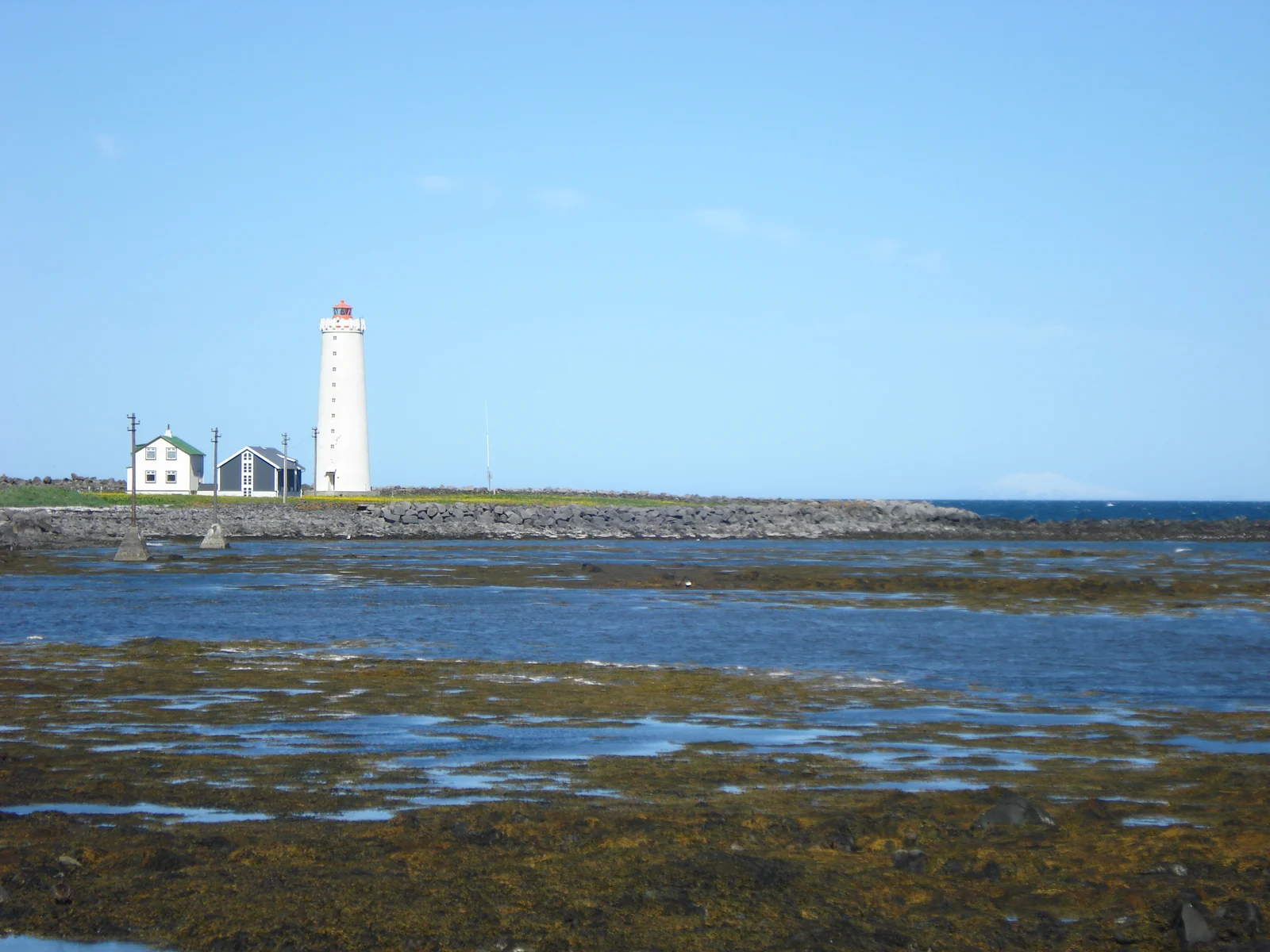
Coast or island?
Grótta lies at the western tip of Seltjarnarnes, just west of Reykjavík. The white lighthouse is an appealing destination, but its island is connected to the mainland by a narrow strip that goes underwater at high tide. A view of the lighthouse from the coast is not the same outing as walking across to it. [1] [4]
Choose the coastal visit first. Add the island only if the seasonal rules, the published crossing window and conditions all allow it. You do not need to reach the lighthouse to enjoy the wider peninsula’s sea views and birdlife.
Seltjarnarnes
On the map
Explore the locations using the links below.
OpenFreeMap · © OpenMapTiles · © OpenStreetMap
Island area marker only. It does not show a crossing route, parking entrance or permission to enter.
Location sources
Read the return window, not just low tide
Open the municipality’s tide table for the month and year of your visit. Find the correct date, then read the complete group of Opens, Low tide and Closes columns. Check the return limit before setting out, and leave enough margin to get back. A low tide time alone is not a departure plan. [1] [2]
The November 2026 sheet illustrates why the column headings matter. Its general note mentions access around three hours either side of low tide, while the printed opening and closing columns use two hours either side. Use the published opening and closing entries rather than calculating a longer window from the general sentence. The sheet also contains times that cross midnight, so keep the calendar date in mind. [2]
Do not copy November’s times into a trip in another month. Save the correct current table for reference, then follow signs and any newer local restrictions. If the crossing or return is uncertain, stay on the mainland. Never treat a visible strip of ground as a promise that it will remain exposed.
Check the nesting closure separately
Low tide does not override a seasonal closure. When checked on 18 November 2026, the municipality’s tide page said Grótta closes from 1 May through 31 July each year. Náttúra’s general reserve page instead listed 1 May through 15 July. These official pages do not agree on the end date. [1] [3]
For a July visit, do not infer permission from the earlier date. Use the municipality’s current monthly notice and local signs, and seek confirmation from the municipality before planning an island crossing during the disputed period. Keep a mainland plan if access is not confirmed.
The restriction protects nesting birds, including Arctic terns. Around the wider peninsula, stay on marked paths and give birds space. A photograph of someone on the island during summer is not permission to follow them. [3] [4]
Keep a mainland alternative
Visit Reykjavík recommends the coastal paths of Seltjarnarnes for walking or cycling and identifies Bakkatjörn as a birdwatching spot. Choose a permitted mainland section if the island does not fit your day. Respect any local barriers there too; the alternative is not a promise that every shoreline path is open. [4]
Check the weather forecast and Safetravel before leaving. Wind, darkness and the surface underfoot can make a short coastal outing a poor choice. Bring suitable layers and footwear, and be willing to shorten the walk. A tide table does not assess the weather for you. [5] [6]
Our Reykjavík day plan offers a central city alternative. For a different birdwatching setting without this island crossing, use the Tjörnin pond walk guide. If the weather calls for time indoors, choose from our Reykjavík rainy day guide.
Our map marks the Grótta island area only. It is not a route across the shore, a parking entrance or evidence that the lighthouse interior is open.
Common questions
Can I walk to Grótta whenever I arrive?
No. Island access depends on the tide window, seasonal restrictions and current conditions. Check the return before crossing.
Can I visit the lighthouse during the nesting closure?
Do not cross into the closed island area. Choose a permitted mainland walk and follow local signs.
Does low tide guarantee a suitable visit?
No. Weather, seasonal restrictions and the return window still matter. Stay on the mainland if any part of the plan is uncertain.
Sources & useful links
Checked 18 November 2026. Trail access, weather and operator details can change.